


8 Ball Kick
4.52.67K Reviews
App Specs
- Version
- 1.0.2.4
- Updated On
- License
- Free
- Downloads
- 10,000,000+
- Developer
- execl marocco
- Categories
- Puzzle
- Platform
- Android
Screenshots
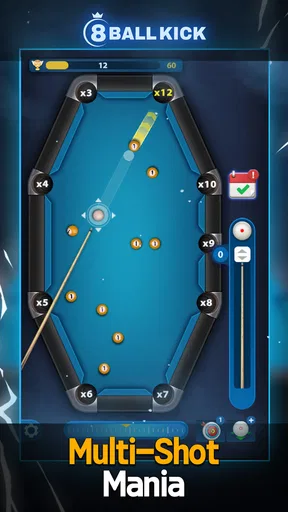
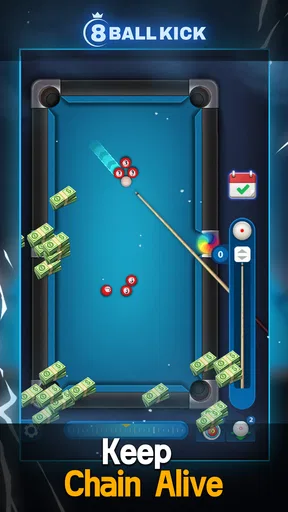
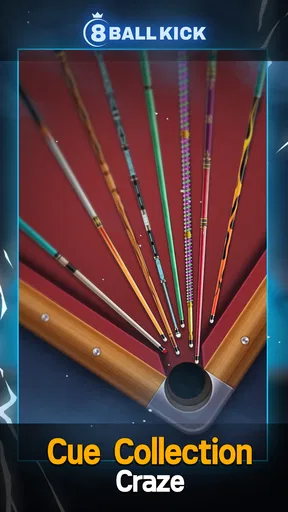
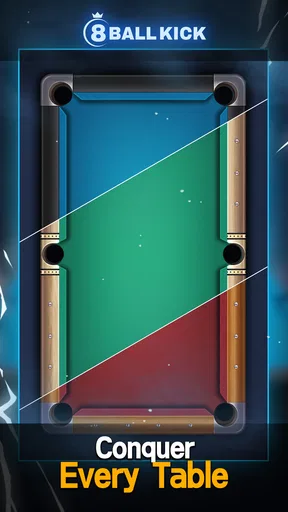
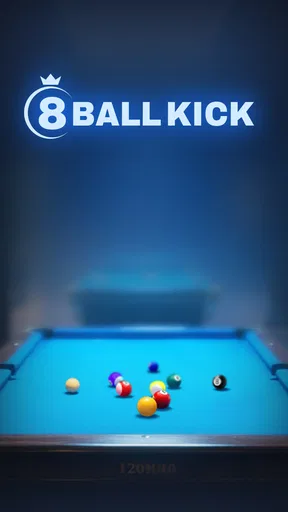
 Analysis by AppCompare
8 Ball Kick is a free puzzle game built around a simple idea: line up a shot, judge the angle, and try to make one precise move count. I found the appeal in its short-session format. It is the kind of game I can open when I have a few spare minutes, take a couple of attempts, and put down without feeling that I have abandoned a long campaign. The store summary, “One Shot, Infinite Thrills!”, captures the intended tension, although the real question is whether the one-shot format stays interesting after the first novelty wears off.
Developed by execl marocco, the game sits in the casual end of the puzzle category while borrowing the familiar visual language of pool. That combination makes it immediately understandable: you do not need a long tutorial or knowledge of a complicated fictional world before attempting a level. Its short description, “8 Ball Kick,” is equally direct. The game is about the shot itself, not about building a character, managing a team, or learning a large collection of rules.
The audience response is already substantial, with an average rating of 4.5 from around 223 thousand ratings and more than 2.6 thousand written reviews. It has also passed 10 million installs, which tells me that the basic concept has reached far beyond a tiny niche. Those figures do not guarantee that every player will enjoy it, but they do make it easier to treat this as an established casual game rather than an untested experiment.
How the free format affects its value
The most important practical fact is that 8 Ball Kick is free. That makes the decision easy for anyone who wants to test a pool-inspired puzzle without committing money first. I can install it, try the aiming style, and decide from actual play rather than relying on screenshots or a description. For a game designed around quick attempts, that low entry barrier is a genuine strength.
Free access does not automatically mean unlimited value, though. A game like this earns its place on my phone only if the central shot remains satisfying after the first few sessions. The initial attraction comes from understanding the goal almost instantly; the longer-term value depends on whether each attempt gives me a reason to adjust my angle, timing, or approach instead of repeating the same action mechanically.
I would judge the cost in terms of attention rather than money. Since there is no purchase price to weigh here, the useful question is whether the game deserves a place among other free distractions. If you enjoy compact puzzle challenges, the answer is likely yes for at least a trial period. If you want a deep billiards simulation, a story, or a large progression system, free access will not change the fact that this is a much narrower experience.
That distinction matters when comparing it with ordinary pool games. A traditional billiards app usually asks me to care about table positioning, legal shots, ball control, and the broader structure of a match. 8 Ball Kick is more focused on the individual puzzle moment. I would choose it when I want a quick test of spatial judgement, not when I want to recreate a complete game of eight-ball with another person.
Worth Reading Before You Choose

EA SPORTS FC Mobile 26 Is a Bigger Football Game, but It Takes Time

Flipboard Shows What News Apps Must Do Beyond the Feed

Switching to Android Auto Means Rethinking Your Driving Routine

Google Calendar Makes a Crowded Week Easier to Manage

Ludo King Makes the Most of the Minutes Between Plans

Baby Panda World Brings Quick Play to Modern Phones, but Its Game Library Feels Busy
What the core challenge does well
The strongest part of the design is its readability. Pool provides a natural puzzle board: balls, pockets, lines, and obstacles can communicate the problem without much text. That lets the game get to the interesting decision quickly. I can look at a setup and ask, “What path gives me the best chance?” That immediate question is more valuable than a long explanation because it turns the screen into something I actively inspect.
My advice is to resist the instinct to aim only at the target ball. The better habit is to study the complete route: where the cue ball will travel, what it may touch, and where the object ball needs to finish. Even when a shot looks obvious, checking the exit path first can prevent a careless attempt. This is a small but useful change in thinking, and it is one reason the game can feel more like a puzzle than a simple tap-to-win activity.
Another practical tip is to treat early attempts as information gathering. Instead of immediately repeating the same angle after a miss, I would change one variable at a time. Try a slightly wider approach, then a more conservative line, and notice which part of the plan failed. That method makes short sessions feel more purposeful and helps separate a bad idea from a nearly correct one.
The one-shot emphasis also creates a particular kind of pressure. In a conventional pool match, a poor shot may be followed by many other turns. Here, the single-attempt framing makes preparation feel more important. I like that when I am in the mood for concentration, but it can be frustrating if I want a relaxed game where mistakes are absorbed by a longer match.
Where the experience may become repetitive
The same focus that makes the game accessible can also limit it. Because the basic interaction is easy to understand, the challenge needs enough variety to keep my attention. If the layouts begin to feel too similar, the experience can shift from thoughtful planning to routine aiming. That is the main risk for players who expect a puzzle game to keep introducing fresh ideas.
I would not recommend treating every failed shot as a sign that the controls are poor. Pool-style aiming is sensitive by nature, and a small change can alter the result. Still, players who dislike precision tasks may experience that sensitivity as friction rather than depth. This is especially true for anyone who prefers puzzles based on words, matching, or logic grids, where the answer is usually less dependent on fine motor adjustment.
There is also a difference between enjoying the concept and enjoying repeated practice. I can appreciate the satisfaction of solving a difficult angle while still deciding that I do not want to spend a long evening doing it. For me, the game works best in controlled portions. A few attempts during a break feel sharper than an extended session in which the same visual language starts blending together.
The current version is 1.0.2.4, and the game supports devices running Android 7.0 or later. That makes it accessible to many older Android phones, which is useful for a lightweight casual title. I would still pay attention to how comfortably the game runs on a particular device, especially if the screen is small or touch input is less precise, because aiming games benefit from clear visibility and confident control.
Small habits that improve each session
I found three habits especially useful. First, I look at the pocket and the target ball as a pair rather than choosing an angle from the cue ball alone. Second, I pause before committing instead of treating the first visible line as the correct one. Third, I stop after a frustrating run and return later. That last habit sounds simple, but precision puzzles become less enjoyable when I keep forcing attempts after my attention has dropped.
A fourth approach is to use the game as a visual warm-up. Before starting a work break or switching to another task, I can play a small number of shots and focus on predicting the result. The value is not just winning; it is practicing a quick mental rotation of paths and angles. This makes the game more useful for short attention resets than for passive scrolling.
Players who usually hold their phone with one hand may also want to consider how they aim. A two-handed grip can make small adjustments feel more deliberate, while a one-handed grip is more convenient but may encourage rushed movements. I would not call either method universally better. The right choice depends on whether convenience or precision matters more in the moment.
Who is most likely to enjoy it
8 Ball Kick is a good match for someone who likes short puzzle sessions, visual problem-solving, and the feeling of improving through better judgement. It is particularly approachable for players who already understand the basic idea of pool but do not want to learn a full simulation. The familiar table setup gives the game an advantage over abstract puzzle boards because I can understand the objective almost immediately.
It also suits people who want a free game with a clear premise. There is no need to invest in a paid title before finding out whether the central mechanic works for them. I would suggest it to a friend who enjoys opening a game during a commute, while waiting for an appointment, or between household tasks. In those moments, a focused shot can be more satisfying than a game that demands a long uninterrupted session.
For example, if I have ten minutes before leaving home, I can play a handful of attempts without needing to remember a story or manage a complicated inventory. If I miss, I can think about why and try again later. That makes the game easy to fit around real life. It does not require me to organize my day around it, which is one of its clearest everyday strengths.
I would be more cautious about recommending it to someone who wants competitive multiplayer, detailed physics, or a complete eight-ball rule set. A dedicated billiards alternative will be better for players who care about full matches, cue control, and the social rhythm of playing against another person. Likewise, a broader puzzle collection may offer more variety to someone who becomes bored when one mechanic dominates the experience.
What to expect before installing
The mature 17+ content rating is worth noticing before installation. Even though the central concept sounds casual, the age classification means the game is not positioned as a children’s title. Parents choosing games for younger players should check the rating on the relevant store and decide whether it fits their household rather than assuming that a pool-themed puzzle is automatically suitable for every age.
The game is free, but I would still approach any free mobile title with sensible expectations about the overall experience. The absence of a purchase price makes trying it low risk, yet it does not guarantee that every part of the session will match a player’s preferences. The right way to evaluate it is to pay attention to how the actual play feels: whether aiming is comfortable, whether the challenge stays fresh, and whether the age rating suits the intended user.
I would also avoid judging it solely by the number of installs or the average rating. Those figures show broad interest, but puzzle games are personal. A player who loves precise visual challenges may rate it highly, while someone who wants narrative progression may find it too focused. The most useful test is whether the one-shot format gives you a satisfying decision each time you play.
My final recommendation
After looking at the game as both a puzzle and a free mobile pastime, I see 8 Ball Kick as a focused option rather than an all-purpose pool game. Its appeal comes from fast understanding, compact attempts, and the satisfaction of finding a workable route through a table layout. I especially like the way it can turn a spare minute into a small exercise in planning instead of just another automatic tap.
Its limitations are equally clear. Players who need constant novelty, rich progression, realistic match structure, or social competition should choose a different type of game. The precision-first design may also test the patience of people who prefer forgiving controls. Those are not minor details; they define whether the game feels engaging or repetitive.
For me, the free price makes trying it worthwhile, provided I approach it as a short-session puzzle rather than a full billiards replacement. The large player base and 4.5 average suggest that the central idea connects with many people, but my recommendation remains conditional: install it if you enjoy visual angles and deliberate shots, and skip it if you want a complete pool simulator.
In the end, 8 Ball Kick earns its place as a convenient, narrowly focused puzzle game. I would keep it available for quick breaks, especially when I want a challenge that begins immediately and does not require a long commitment. It delivers the most value to patient players who enjoy refining a plan; for everyone else, the free access makes a brief trial the fairest way to decide.
Pros
- Simple controls make it easy for beginners to start playing.
- Quick matches are convenient for short gaming sessions.
- Pool-style physics make successful shots feel satisfying.
- Works well as a casual game for passing time.
- Progression can encourage players to keep improving their aim.
Cons
- Gameplay may become repetitive after extended play sessions.
- Some levels can feel more frustrating than challenging.
- Ads may interrupt the experience between matches.
- Limited variety can reduce long-term appeal for advanced players.
- Precise shots may take practice on smaller mobile screens.
FAQs for 8 Ball Kick
What is 8 Ball Kick, and how is it different from a regular pool game?
8 Ball Kick combines traditional eight-ball pool with a more action-focused kicking mechanic. Instead of relying only on standard cue shots, you may need to control powerful kicks, plan angles, and use timing to complete challenges or defeat opponents. The game is designed for quick, entertaining matches, making it suitable for casual players while still offering enough precision and strategy for pool fans.
Is 8 Ball Kick free to download and play?
8 Ball Kick can generally be downloaded at no initial cost, but the exact availability of free features may depend on the Android or iOS version. Like many mobile games, it may include optional advertisements, in-app purchases, or items that help unlock content and customize gameplay. You should review the store listing before installing, especially if the device is used by children.
Can I play 8 Ball Kick without an internet connection?
Some parts of 8 Ball Kick may work offline, particularly basic practice or single-player activities, but online matches, rankings, events, and certain rewards usually require an active internet connection. Offline availability can vary after updates and between devices. If you plan to play while traveling, test the game in airplane mode first rather than assuming every mode will remain accessible.
Does 8 Ball Kick support multiplayer matches?
Multiplayer is one of the main reasons players may choose 8 Ball Kick, although the available options can depend on the current version. You may be able to compete against online opponents, challenge friends, or participate in competitive events. A stable connection is important because delayed input can affect aiming and timing. Check the in-game menus to see which multiplayer modes are currently active.
What devices and permissions are required to run 8 Ball Kick?
8 Ball Kick requires a compatible Android or iOS device with enough free storage for the installation and future updates. Performance is usually smoother on newer phones and tablets, especially during animated matches or online play. The game may request permissions related to internet access, notifications, and purchases. Before downloading, compare the store requirements with your device’s operating-system version and available space.


